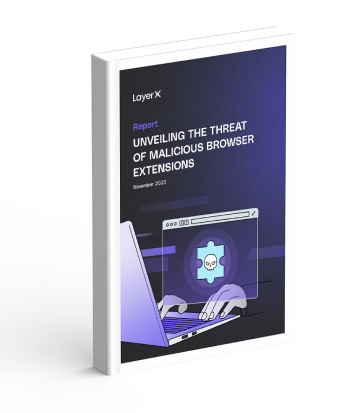
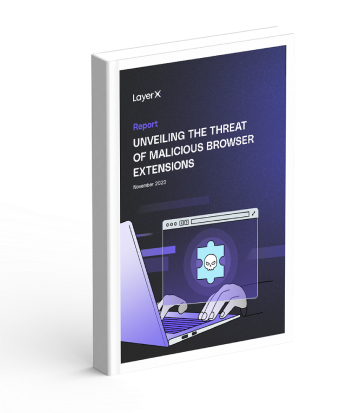
Report
Unveiling the Threat of Malicious Browser Extensions

Most security stacks cannot see what happens inside AI tools. Learn how to evaluate AI usage control solutions based on real enterprise risk.

Malicious browser extensions are a threat to browser security. They are able to gather sensitive data, monitor online activities, inject unwanted advertisements, divert traffic to malicious sites, and even take control of a user's browser.

Unfortunately, they are also able to evade the detection and prevention capabilities of the endpoint and network security stack, making them a popular choice for malicious actors. How can organizations protect themselves?

Read this report to learn:

Extensions Report LP
  • How and why malicious extensions became the ultimate browser compromise vector.
  • Which browser extension components and capabilities can be used by malicious actors.
  • Browser extension permissions and the risk they pose.
  • The steps of a browser extension-based attack.
  • Mitigation steps.
  • And more 

Malicious browser extensions are a threat to browser security. They are able to gather sensitive data, monitor online activities, inject unwanted advertisements, divert traffic to malicious sites, and even take control of a user's browser.

Unfortunately, they are also able to evade the detection and prevention capabilities of the endpoint and network security stack, making them a popular choice for malicious actors. How can organizations protect themselves?

Read this report to learn:

  • How and why malicious extensions became the ultimate browser compromise vector.
  • Which browser extension components and capabilities can be used by malicious actors.
  • Browser extension permissions and the risk they pose.
  • The steps of a browser extension-based attack.
  • Mitigation steps.
  • And more